The Unseen Force Multiplier Harnessing True Power with Hysteresis Dynamometer Precision 🔋💡


Let's talk about power. Raw, untamed, beautiful power. Whether it's the throaty roar of a performance engine pushing boundaries 🏁, the relentless spin of an industrial turbine generating megawatts ⚡, or the silent hum of an advanced electric motor in a cutting-edge robot 🤖, *measuring* that power accurately is the linchpin of progress, efficiency, and reliability.
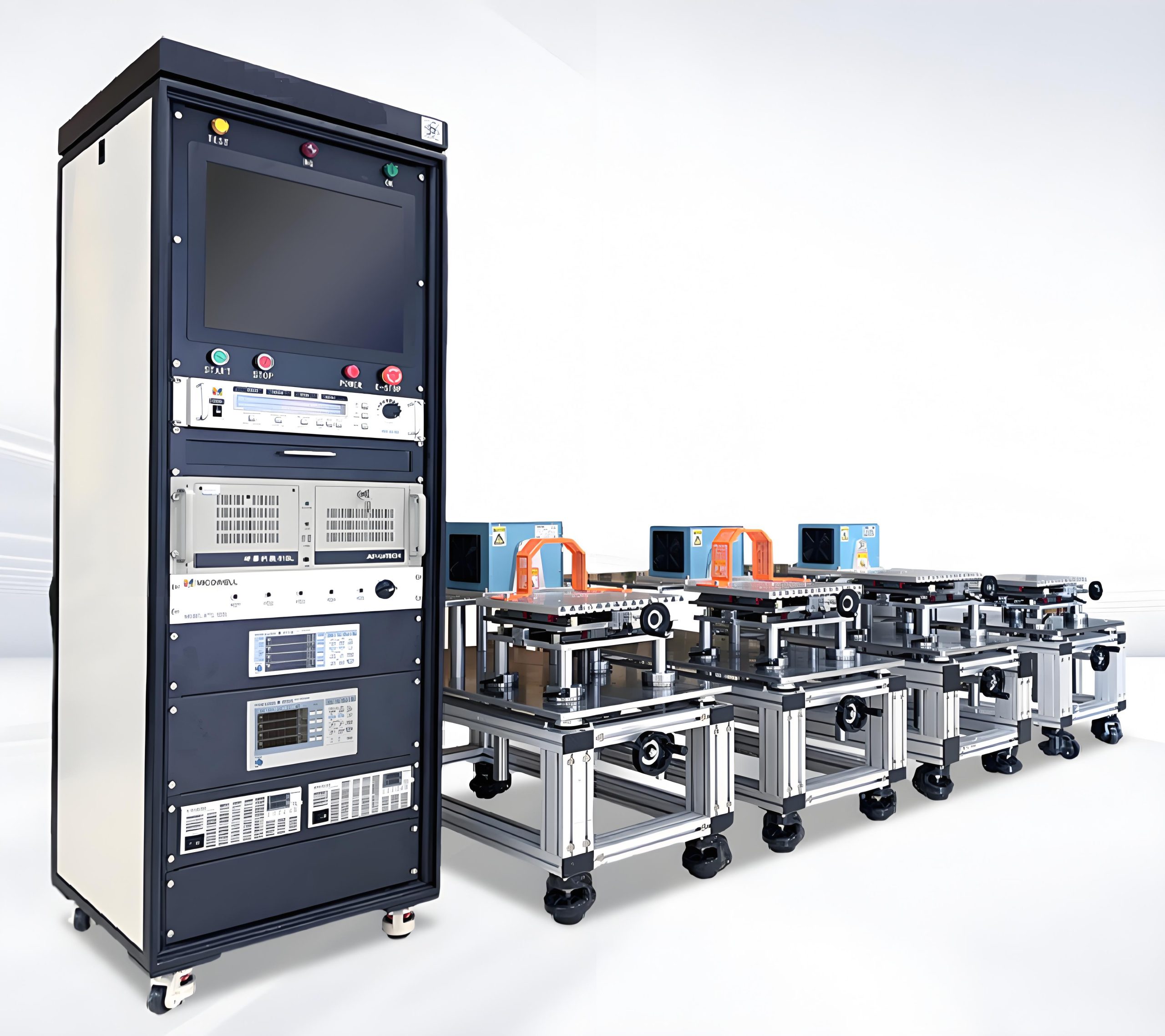
For decades, engineers and test labs wrestled with the limitations of traditional dynamometers. Water brakes, while robust, could be messy, slow to respond, and lacked fine low-end control. Eddy current dynos offered speed but often introduced unwanted electrical noise and complex cooling requirements. The quest? A solution offering unparalleled precision, whisper-quiet operation, blistering response times, and near-bulletproof reliability across a staggering range of applications. Enter the unsung hero, the technological tour de force: the **Hysteresis Dynamometer**.
Think of it not just as a measuring device, but as the ultimate power *interrogator*. It doesn't just read the numbers; it understands the very soul of the rotating machine under test. How? Through the elegant, almost magical, application of electromagnetic principles.
**The Silent Sorcery: How Hysteresis Works Its Magic (Without the Smoke and Mirrors)**
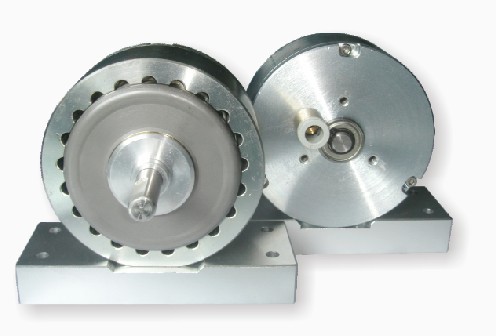
At its heart, a hysteresis dynamometer is deceptively simple. Imagine a rotor, connected directly to your prime mover – your engine, motor, or turbine. This rotor spins inside a stator, but crucially, *without any physical contact*. No brushes to wear out, no gears to grind, no water to spray. The magic happens in the air gap. The stator contains electromagnetic coils. When we energize these coils, we create a powerful magnetic field.
Here's where physics takes the lead. As the rotor (typically made of a specially formulated magnetic alloy) spins within this field, the magnetic domains within the rotor material constantly flip and realign. This flipping isn't instantaneous; it *lags* behind the changing field. This inherent lag, this resistance to change, is **Hysteresis**. And this hysteresis effect? It directly translates into a pure, smooth, and *controllable* braking torque on the rotor.
The beauty lies in the control. By precisely adjusting the current flowing through the stator coils, we control the strength of the magnetic field. Stronger field? More magnetic domain flipping, more resistance, more braking torque. Weaker field? Less resistance, less torque. It’s an exquisitely linear and responsive relationship. This means we can apply incredibly precise load profiles – from feather-light resistance to bone-crushing stopping power – all with the flick of a switch (or rather, the adjustment of a digital command).
**Why Hysteresis Reigns Supreme: Unpacking the Tangible Advantages**
Okay, the science is cool, but what does this *actually* mean for your testing floor, your R\u0026D lab, or your production line? Why does hysteresis consistently outperform the alternatives when precision and reliability are non-negotiable? Let’s break it down:
1. **Unmatched Precision \u0026 Repeatability: 📏 Bullseye, Every Time.**
Hysteresis dynamometers deliver incredibly accurate torque measurement across their entire operating range. The torque generation is inherently smooth and free from the cogging or ripple often associated with other technologies. This translates to cleaner data, more reliable test results, and absolute confidence that the performance numbers you're seeing are the *real* numbers. Whether you're mapping an engine's fuel efficiency sweet spot or certifying a motor for safety-critical aerospace applications, precision isn't a luxury; it's the bedrock.
2. **Lightning-Fast Dynamic Response: ⚡ Reacting at the Speed of Thought (Almost).**
Need to simulate the sudden load dump of a failing alternator? Or replicate the rapid acceleration/deceleration cycles of an electric vehicle drivetrain? Hysteresis dynamometers excel here. Because the braking force is generated electromagnetically (with no moving parts involved in the torque reaction itself), changes in load happen almost instantaneously – think milliseconds. This dynamic capability is crucial for modern development cycles, especially for hybrid/electric powertrains and complex control system validation where transient behavior is paramount.
3. ** servo press -Quiet Operation: 🔇 Focus on the Signal, Not the Noise.**
Forget the roar of water brakes or the whine of high-speed eddy current systems. Hysteresis dynamometers operate with remarkably low acoustic noise. This is a massive advantage in NVH (Noise, Vibration, Harshness) testing environments, where extraneous noise from the dyno itself can contaminate your measurements. It also creates a much more pleasant (and safer) working environment for technicians. Truly hear the nuances of your machine.
4. **Zero-Speed Torque Capability: 🛑 Holding Power, Without the Spin.**
This is a game-changer. Unlike many other dyno types, a hysteresis dynamometer can apply and hold full rated torque *even when the shaft is stationary*. Think about testing the stall torque of a high-performance motor, validating clutch engagement characteristics, or simulating the immense starting torque required by heavy machinery. Hysteresis handles it effortlessly, providing critical data points that were previously difficult or impossible to obtain cleanly.
5. **Intrinsic Smoothness \u0026 Wide Speed Range: 🌀 From Crawl to Hyperspeed.**
The hysteresis principle generates torque with exceptional smoothness, devoid of pulsations or cogging effects. This allows for stable testing at very low speeds (crucial for characterizing startup behavior) and extends seamlessly to very high rotational speeds. You get a continuous, frictionless braking force across an impressively broad operational envelope with a single unit.
6. **Robustness \u0026 Low Maintenance: 🛡️ Built for the Long Haul.**
No physical contact. No consumables like water or brake pads. Significantly reduced wear and tear compared to mechanical or hydraulic systems. This translates directly to lower operating costs, minimal downtime, and exceptional long-term reliability. Hysteresis dynos are workhorses engineered for demanding, continuous operation in industrial settings. Less time fixing, more time testing.
7. **Clean Energy Handling \u0026 Regeneration Potential: ♻️ Power Smart.**
The energy absorbed by the dyno during braking is dissipated as heat. However, advanced hysteresis systems can be integrated with sophisticated energy recovery units (like regenerative grid converters). This allows a significant portion of the absorbed energy to be fed back into the facility's electrical grid, slashing operational power costs and reducing the environmental footprint of your testing – a win for both your budget and sustainability goals.
**Where Does the Hysteresis Dynamometer Truly Shine? Real-World Applications Illuminated 💡**
The versatility of hysteresis technology makes it indispensable across a vast spectrum of industries. Here’s where it’s making waves:
* **Automotive \u0026 Motorsport Powertrain Development: 🏎️**
From fine-tuning combustion engines for maximum efficiency and emissions compliance to pushing electric motors and controllers to their absolute limits under brutal dyno cycles, hysteresis dynos provide the precise, dynamic, and repeatable load application needed. Mapping torque curves, validating transmission shifts under load, endurance testing – it's the benchmark for powertrain excellence. Racing teams rely on its responsiveness to simulate real-track conditions and shave milliseconds off lap times.
* **Electric Motor \u0026 Drive System Validation: ⚡🔌**
The electrification revolution demands unprecedented testing rigor. Hysteresis dynamometers are perfect for characterizing BLDC, PMSM, and induction motors – measuring efficiency maps with pinpoint accuracy, testing overload capacity, validating controller algorithms (like FOC), and performing accelerated life testing. The zero-speed torque and wide speed range are particularly valuable here. Testing battery pack performance under realistic, dynamic load profiles? Hysteresis delivers.
* **Aerospace \u0026 Defense: ✈️🛡️**
Where failure is not an option, precision is paramount. Testing APUs (Auxiliary Power Units), actuators, landing gear systems, gas turbine starters, and critical flight control motors requires the absolute reliability, accuracy, and smooth control offered by hysteresis dynamometers. Certifying components to rigorous military and aviation standards demands nothing less.
* **Industrial Machinery \u0026 Pumps: 🏭💧**
Validating the performance and durability of industrial gearboxes, large pumps, compressors, and conveyors under realistic load conditions. Simulating the inertia of massive systems or testing emergency stop scenarios. Hysteresis dynos provide the robust, high-torque capability needed for heavy industry.
* **Research \u0026 Academia: 🎓🔬**
Universities and advanced research labs leverage hysteresis dynamometers for fundamental studies in machine dynamics, control theory, magnetic materials, and energy conversion. Their precision, controllability, and clean data output make them invaluable tools for pushing the boundaries of knowledge.
* **Consumer Appliances \u0026 Power Tools: 🛠️🔋**
Ensuring your next-generation cordless drill delivers consistent torque, or that a high-efficiency washing machine motor performs flawlessly for thousands of cycles. Hysteresis dynos provide the accurate, repeatable testing platform needed for consumer-grade reliability and performance claims.
**Choosing Your Champion: Key Considerations for Optimal Hysteresis Dyno Selection**
Not all hysteresis dynamometers are created equal. To harness the full potential, consider these critical factors:
1. **Torque \u0026 Speed Range:** Match the dyno's capabilities precisely to your current and anticipated future testing requirements. Consider peak torque, continuous torque, and the maximum/minimum speeds you need to cover.
2. **Dynamic Response:** How quickly does it need to change load? Specify required torque rise/fall times.
3. **Control System \u0026 Software:** This is the brain. Look for intuitive, powerful software that offers flexible control modes (speed, torque, power), sophisticated test sequencing, comprehensive data logging, and robust analysis tools. Seamless integration with your existing test automation or data acquisition systems (like CAN bus) is crucial. Modern systems offer remote monitoring and control capabilities.
4. **Accuracy \u0026 Resolution:** What level of measurement precision do your standards demand? Understand torque and speed accuracy specifications.
5. **Cooling System:** Efficient cooling is vital for sustained high-power operation. Air-cooling suffices for lower power, but liquid cooling (often using specialized oil) is essential for high-power, continuous duty applications.
6. **Frame \u0026 Mounting:** Ensure the dyno's construction is robust enough to handle the torques and potential vibrations of your application. Proper alignment with the prime mover is critical.
7. **Regeneration Capability:** If energy costs or sustainability are significant concerns, prioritize dynos with integrated high-efficiency regeneration options.
8. **Manufacturer Support \u0026 Calibration:** Choose a reputable supplier known for quality engineering, comprehensive technical support, and readily available calibration services to maintain traceable accuracy over time.
**Beyond the Spec Sheet: The Intangible Value Proposition**
Investing in a hysteresis dynamometer isn't just about buying a piece of test equipment; it's about empowering your team and accelerating your innovation cycle.
* **Faster Time-to-Market:** Get reliable, conclusive data faster, reducing development iterations and speeding product launches.
* **Enhanced Product Quality \u0026 Reliability:** Identify performance flaws and weaknesses early with precise data, leading to more robust, reliable products that build brand reputation and reduce warranty costs.
* **Unlock Deeper Insights:** The exceptional data quality allows engineers to understand subtle performance characteristics and interactions that might be masked by noisier systems.
* **Boost Engineer Productivity:** Intuitive control software and reliable hardware free engineers from fighting the equipment, allowing them to focus on analysis and problem-solving.
* **Future-Proofing:** The wide operating range and adaptability of hysteresis dynos make them valuable assets capable of handling evolving testing needs for years to come.
**The Future is Electromagnetic: Embracing the Hysteresis Advantage**
In a world demanding ever higher efficiency, quieter operation, electrified solutions, and uncompromising reliability, the hysteresis dynamometer stands out as the superior choice for demanding power measurement and loading applications. Its unique blend of precision, speed, smoothness, robustness, and quiet operation solves the limitations that have plagued traditional dynamometer technologies for decades.
Stop wrestling with inadequate measurement tools. Stop settling for noisy, slow, or imprecise data. It's time to harness the true power of your machines with the clarity and control only a hysteresis dynamometer can provide. Unlock deeper insights, accelerate your development, and build superior products with confidence.
**Ready to Experience the Hysteresis Difference?**
Don't just take our word for it. Discover how integrating a state-of-the-art hysteresis dynamometer system can revolutionize your testing capabilities. Contact our team of application specialists today for a personalized consultation. Let's discuss your specific challenges, explore tailored solutions, and see how we can help you achieve unparalleled precision and efficiency in your power testing. Request a demo, download detailed specifications, or ask about our comprehensive support packages. The power to measure true performance awaits. 🚀 Let's get started!